What kind of agency do you need? (Thoughts on eliminating the middlemen in media)

Over the last 3 years I’ve been involved in about 18 agency selection projects with clients – where we help them evaluate and select an agency to manage their media. (By the end of this year I’ll have seen a few more of these projects). Across all these projects I’ve noticed one very consistent pattern – ALL the clients start off with looking at generalist media agencies (from the 6 international advertising holding companies) as a one-stop solution.

Here’s 3 reasons why that is not the best thing to do:

Lack of specialized knowledge/tools/skillsets in many areas, especially ad-tech

Media agencies specialize in being non-specialists. They’re very good at broad media strategy and consumer insight but don’t always have the resources to do any single area (especially more ad-tech based areas like performance marketing) to a high degree of success. If you’re spending a large budget across TV, Digital Display, Digital Video, OOH and so on, then a generalist is a good place to start but if you’re more focused on ecommerce or programmatic media, then not so much.

2. Media agencies will use other players in the chain and make more money doing so

Media agencies tend to farm out work that they can’t do themselves. I’ve worked on performance marketing campaigns (in my DSP/ADN days) where we had a target of $4/install of an app and the agency had committed a higher number to the client, giving them a nice 20%+ number to live off of, for doing basically nothing. Working directly with DSPs and performance marketing agencies can make your budget work a lot harder.

3. Signing up with a media agency from a holding company DOES NOT get you access to the other specialist companies in the group

We’ve all seen the holding company slides with an assortment of logos and specialist companies in various areas and many clients assume they’re getting access to all those specialists as needed. In reality, many of these specialists, especially if they’re start-ups in their earnout phase with an acquirer, are separate businesses from the media agency and will not provide any services that are not paid for at their, usually higher, consulting rates. This leads to generalists trying a DIY approach and often doing a much poorer job, or farming out the budget to external companies which leads to a loss of value in the buying chain.

How can you avoid these problems?

Take a close look at how you spend your marketing budget and whether there are a couple of key areas that can make or break your business. If so, that part of the budget needs to be handled by a specialist and you need direct control / access to them. This could be e-commerce specialists, performance marketing agencies, DSPs, DMPs or what have you – the advertising landscape is filled with specialists to choose from.

You could still go through a media agency but make sure you evaluate the specialists they work with (both within their holding company and outside) make your own choice and sign your own contract with them.

Alternatively, you may not need a generalist media agency at all. Evaluate the specialists and hire one and if you need some occasional strategy / traditional media negotiation that can be done on a project basis by a media agency or other consultant.

Media agencies may be the “Safe” option but they may not always be the right choice for you, depending on the size and deployment of your budget. For more on how to navigate those choices, write to me d.sriram@searchlightchina.com

With over 30 years experience managing agencies, ad-tech startups and consulting Sriram has a deep understanding of how media and ad-tech services work, especially in China. Reach out to him for more information on how to define and select your marketing services partners in China.
Little Ondine – the start-up cosmetics brand that made it big in China

Challenge: After an initial successful launch, many copycats launched cheap products on EC forcing Little Ondine to reduce prices. The business dropped in the absence of tactical price promotions. Offline stores lost revenue and became unprofitable.

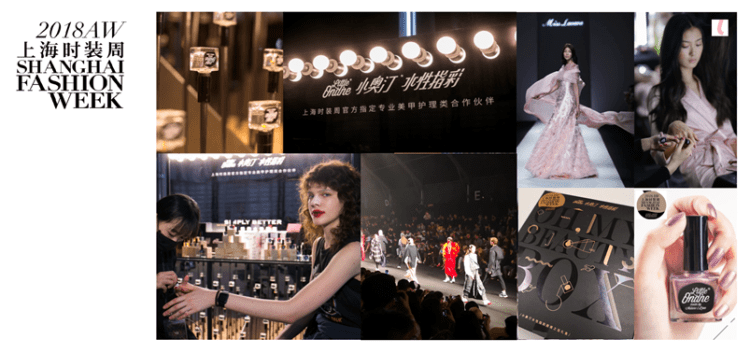
A montage of Little Ondines slew of low cost, high ROI engagements

The consumer profile on Tmall is students or girls from T2 cities who can’t afford regular visits to the nail salon. A fast-growing follower “Miss Candy” outperformed LO to become the leader in the water-based nail polish category.

Objective: Build perception of LO to new consumer groups and differentiate LO from the category. Optimize its core business in China.

Strategy and Key actions:

1. Re-define target consumers who value what LO offers and run a fully integrated marketing communication plan to connect and engage with them.

2. Build up brand architecture including new positioning, re-define USP and brand story.

3. New product portfolio and pricing strategy. Clearly define role of each product (volume driver, profit driver, induce trial, image driver). Eliminate non-strategic SKUs and launch new products.

4. Kept only 3 offline stores for image and brand experience

5. Manage brand assets incl. KOLs, visuals, WOM, SEO…etc. Launched brand new EC pages.

High ROI engagements: a series of planned brand collaboration to accelerate sampling and penetrate to the newly defined targets

Official sponsor of 2018 Shanghai Fashion Week – was successfully adopted by 2019 London Fashion Week for all the 60 models’ nail art in London Fashion Week (LFW) generating great free exposure on Instagram

In-depth collaboration with Pernod Ricard’s new brand “Little J” launch, truly integrated IMC plan, from the launch set (Little J wine+ Little Ondine nail polish) in JD.com and Tmall.com; all the offline product placement in art exhibitions, social contents on Wechat RED.com and others won Little Ondine over 9 million viewership among the right audience.

Brand collaboration with Flower Plus, the largest flower subscription in China (8 million weekly subscribers) delivered brand exposure 140 million times and 12,000 sets of flowers + nail polish were sold.

Little Ondine’s content talks about its viewpoints on fashion and color matching. Its wechat column “Ondine’ view on Fashion” (奥汀聊时尚) won delivered significant readership without media investment. Other brand co-op such as with Costa Coffee, Heytea and asics brought lifestyle talkability and turned Little Ondine a Fashion Lifestyle brand.

Result:

After launching the brand-new image and EC pages, the major revenue contributor Tmall shop’s basket size doubled and conversion rate improved to 7% (from 2.5%) within 3 months. LO’s Purchaser profile changed to sophisticated office white collars in T1 cities. They are mid-high spending power with better taste on brands and willing to spend for quality life (source: Tmall data bank and basket analysis, 2019).

In Apr. 2020, Little Ondine was acquired by “Perfect Diary”, the fastest growing local cosmetic brand (valued 4 Billion RMB by now) and both brands are in the top 20 most trendy cosmetic brands in China.

Leveraging Perfect Diary’s channels and product portfolio, Little Ondine launched its Liquid Lip products and is now perceived to be more trendy than most of International brands (per DataTouch®2020)

Our Managing Partner Jacquelyn Wu worked on the rebranding and marketing strategy refresh of Little Ondine in 2018, prior to their exit via acquisition by Perfect Diary.

Jacquelyn has over 20 years experience in branding and marketing, with specific expertise in the China e-commerce ecosystem for both multinational and startup brands. She has helped several brands navigate a change from B2B to B2C business models. Reach out to her for more information and insights on branding and commerce in China.

China’s Advertiser-Unfriendly Digital Media Ecosystem

There is one profound difference between the digital media landscape in China and everywhere else. The two key players who control most desirable digital advertising inventory / publishers in China do not depend on advertising for their revenue.
China Digital GiantsThis simple fact makes it easy to understand why, unlike Google, Facebook, Twitter or ad-exchanges elsewhere in the world, Ali and Tencent don’t really have any interest in giving advertiser or agency associations any say in how they do business.

Most large publishers / sites / apps in China do not allow 3rd party ad-serving, which means advertising material is on the publishers server. Tracking codes are therefore also on the publishers server which means that ad-tracking is not really 3rd party data – it is based on data from the publishers server to the ad-tracking company.

This opens the door for unscrupulous publishers (or other players in the system) to create fraudulent proofs of ad-appearance. Publishers in China don’t generally accept external code to help in ad-verification, completion rate or viewability measurement.

This means that a lot of the information on impressions, target audience composition and so forth are not worth the paper they’re written on. Given how the market works, relying on these kinds of KPIs is effectively giving your agency and partners a blank check – there is no market where setting KPIs that you can independently measure and verify is more important.

All these problems can be mitigated, even if they cannot be completely solved. The key steps to doing so are:

  1. Take control of your data – subscribe directly to tracking and verification rather than letting your agency mark their own homework
  2. Explore the ad-verification solutions that are relevant to your buying model
  3. Set KPIs that you have your own data for and which are hard to game.

With over 30 years experience managing agencies, ad-tech startups and consulting Sriram has a deep understanding of how media and ad-tech services work, especially in China. Reach out to him for more information.