Famous in China (part 2)

To try and create greater familiarity for those living elsewhere, we’ll periodically profile some China brands and businesses that we believe will be household names across the world soon. This month let’s look at a very interesting brand and business – Shun Feng Express Delivery (顺丰速运)- one of the leading brands in the express delivery business in China.
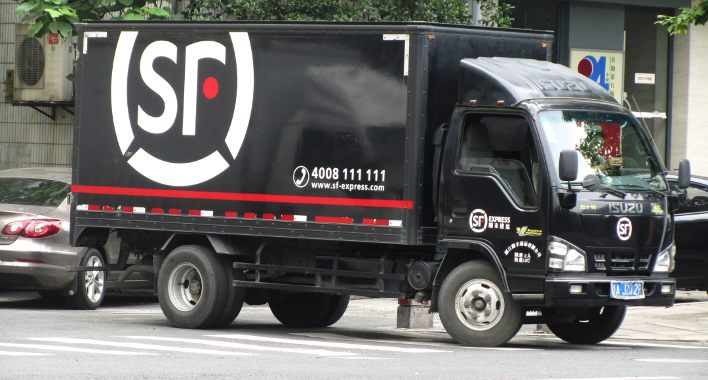
A common sight on the streets in China – a Shun Feng delivery van

Background and History

Established in 1993 in Shunde city, Guangdong Province, China, Shunfeng started as a Hong-Kong to Guangdong delivery specialist. Phonetically, Shun Feng (顺风) refers to a tailwind or a favorable wind, but by changing the last character from 风 to 丰, the name also connotes abundance or prosperity, presumably attained by using the service.

Today, Shunfeng is one of the best known delivery brands in China, operating their own fleet of 50 aircraft and also providing international deliveries. Like most of the other companies in their sector, they’re a public company – listed on the Shenzhen Stock Exchange.

Financials

Despite not being the biggest in terms of deliveries, SF is the biggest in terms of revenue and operating profit amongst its competitors, which speaks to the power of the brand and its ability to command a premium with consumers (which is why we’re featuring SF rather than any of its competitors).

The first-half 2020 semi-annual report covering the period Mar-Aug 2020 shows a very healthy revenue of 71 billion RMB, which promises tremendous growth for the full year over the 112 billion RMB of 2019. Interestingly, SF leads its competitors in revenue by over 80 billion RMB, despite ranking around 6th in terms of delivery volume. That premium pricing model is clearly profitable, with the 2020 semi-annual report showing a net profit attributable to shareholders of 3.76 billion RMB.

Source: State Post Bureau of China, July 2020: Annual Express Market Supervision Report (for 2019)

Success Factors

SF has built a reputation with consumers by focusing on the most premium end of the market – express / overnight deliveries. The other delivery companies have tended to create more options for the consumer on slower, less expensive services, giving them a lot of volume but not the kind of pricing and margin that SF has achieved.

With the e-commerce boom in China, there is a clear opportunity to build a high volume, low margin business with a slower, cheaper delivery option. This is a sector in which all of SF’s competitors are active and SF is definitely late to this party.

Separately, there are lots of specialized delivery services springing up. Ding Dong Mai Cai – a delivery service specializing in fresh goods, for instance, is one of the recent successes that is redefining delivery with specific niches and creating new markets.

Perhaps the way forward is for SF to stay with what it’s good at – premium, express deliveries – and double down on its competitive advantages there, but whether they choose to do that or try and compete in emerging, lower margin but higher volume segments, only time will tell. Clearly though, this 28 year old company has built a high degree of consumer recognition and trust. With their already established international delivery business, their impressive fleet of 50 aircraft and their own cargo airline, it may not be long before that SF truck pulls up in your driveway.

While our focus as a consultancy is making new brands famous in China, there are many (already) famous Chinese brands that aren’t well known overseas. We will be bringing them to light in this series over time.

If you’d like your brand to be famous and successful in China reach out to us at enquiries@searchlightchina.com – we work with both local startups as well as international brands that would like to do better in this market.

Famous Chinese brands you’ve never heard of (part 2)

Often, when I refer to a famous Chinese brand in conversation with someone who doesn’t live here, I get a look of bemusement. To try and create greater familiarity for those living elsewhere, we’ll periodically profile some of the prominent brands and businesses that we believe will be household names across the world soon.

A common sight on the streets in China – a Shun Feng delivery van

This month let’s look at a very interesting brand and business – Shun Feng Express Delivery (顺丰速运)- one of the leading brands in the express delivery business in China.

Background and History

Established in 1993 in Shunde city, Guangdong Province, China, Shunfeng started as a Hong-Kong to Guangdong delivery specialist. Phonetically, Shun Feng (顺风) refers to a tailwind or a favorable wind, but by changing the last character from 风 to 丰, the name also connotes abundance or prosperity, presumably attained by using the service.

Today, Shunfeng is one of the best known delivery brands in China, operating their own fleet of 50 aircraft and also providing international deliveries. Like most of the other companies in their sector, they’re a public company – listed on the Shenzhen Stock Exchange.

Financials

Despite not being the biggest in terms of deliveries, SF is the biggest in terms of revenue and operating profit amongst its competitors, which speaks to the power of the brand and its ability to command a premium with consumers (which is why we’re featuring SF rather than any of its competitors).

The first-half 2020 semi-annual report covering the period Mar-Aug 2020 shows a very healthy revenue of 71 billion RMB, which promises tremendous growth for the full year over the 112 billion RMB of 2019. Interestingly, SF leads its competitors in revenue by over 80 billion RMB, despite ranking around 6th in terms of delivery volume. That premium pricing model is clearly profitable, with the 2020 semi-annual report showing a net profit attributable to shareholders of 3.76 billion RMB.

Source: State Post Bureau of China, July 2020: Annual Express Market Supervision Report (for 2019)

Success Factors

SF has built a reputation with consumers by focusing on the most premium end of the market – express / overnight deliveries. The other delivery companies have tended to create more options for the consumer on slower, less expensive services, giving them a lot of volume but not the kind of pricing and margin that SF has achieved.

With the e-commerce boom in China, there is a clear opportunity to build a high volume, low margin business with a slower, cheaper delivery option. This is a sector in which all of SF’s competitors are active and SF is definitely late to this party.

Separately, there are lots of specialized delivery services springing up. Ding Dong Mai Cai – a delivery service specializing in fresh goods, for instance, is one of the recent successes that is redefining delivery with specific niches and creating new markets.

Perhaps the way forward is for SF to stay with what it’s good at – premium, express deliveries – and double down on its competitive advantages there, but whether they choose to do that or try and compete in emerging, lower margin but higher volume segments, only time will tell. Clearly though, this 28 year old company has built a high degree of consumer recognition and trust. With their already established international delivery business, their impressive fleet of 50 aircraft and their own cargo airline, it may not be long before that SF truck pulls up in your driveway.

Famous in China

To try and create greater familiarity for those living elsewhere, we’ll periodically profile some China brands and businesses that we believe will be household names across the world soon. In this first post of the series we’ll cover consumer electronics brand Xiaomi (小米)and Roewe(荣威)- a car brand from SAIC Motors.

Xiaomi (小米) is a consumer electronics major that already has a presence in China and India and despite some headwinds in the stock market and in India, is well placed for long term growth

SAIC Motors – better known for their Roewe brand – is one of China’s leading car manufacturers that is also dominant in electric cars and has a presence in overseas markets through the MG brand that it bought from Rover many years ago

Xiaomi

Background and history

Xiaomi is a young company, founded only in 2010. It started as a smartphone company, expanded into building it’s own OS and then started both making and investing in a whole array of products in the IoT sector. Today the Xiaomi brand graces a multiplicity of consumer appliances – rice cookers, water filters, smart weighing scales, air-purifiers and the like – all IoT in nature and building towards the concept of a smart home where every device is connected to the internet to provide a better consumer experience.

Xiaomi’s latest TV features a unique transparent screen that allows it to blend into the background when not in use

Financials

Xiaomi generated a total of 205 billion RMB revenue in 2019 according to its latest financial statements, with a very healthy 28 billion in Gross Profit and 10 billion in Net Income.

Success Factors

Xiaomi first made waves in China as an affordable, no-compromise alternative to the iPhone. Instead of being apologetic about their affordability they focused on being an iconic brand, more youthful and approachable than iPhone – amongst other things Apple had very few stores in China back then and while an iPhone was immensely desirable, a lot of the people who could afford it still couldn’t get their hands on one.

Xiaomi evolved rapidly into an iconic brand in its own right, with its own, very unique minimalist design aesthetic. Instead of being an iPhone imitator or a cheap copycat option, it is now a brand with a loyal following and its own community of fans.

It has expanded into multiple other appliances both through direct manufacturing and through funding other technology startups. Every product that bears the Xiaomi name has the same recognizable design features. It has also consistently delivered better features at a lower price than other brands, making it both cool and value for money.

Expanding into an ecosystem of IoT products has taken the brand in a unique direction towards becoming the arbiter of a smart-home. Their success in India is a bit more traditional, driven mostly by affordable smartphones, but in the process they’ve set up a significant manufacturing base in a second country . Ranked 3rd amongst global smartphone makers in a recent report (https://www.idc.com/promo/smartphone-market-share/vendor) Xiaomi may manage to avoid some of the political headwinds that have hurt Huawei’s business interests overseas and go even higher in the global rankings.

SAIC / Roewe

Background and history

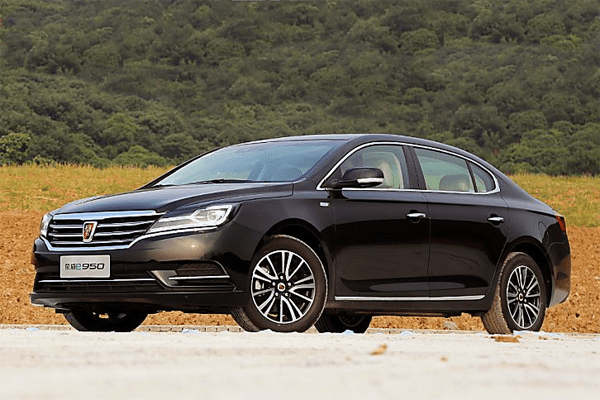
Around 2006, SAIC acquired the MG brand from MG Rover (now defunct) and was also trying to get rights to the Rover brand. When this didn’t work out they came up with a Chinese brand – Roewe (荣威)- which has now become a well-recognized marque in China. SAIC developed the electric and hybrid technology behind the Roewe models. With the 550, 750 and 950 models, they focused on the mid-price and premium car segments in a manner analogous to BMW (3/5/7 series) and Mercedes (C/E/S models) but at lower price points and with more hybrid and all-electric choices.

Financials

SAIC is a mega-corporation with dozens of subsidiaries and JVs with global car brands, so its numbers are pretty staggering. Overall, according to its 2019 annual report it had an operating income of 843 billion RMB in 2019 (down from 902 billion in 2018) with over 35 billion in net operating profit. While about 14 billion of that income (and presumably profit) was from interest, that’s still a reasonable margin for a manufacturing business. SAIC has remained in the top 100 of the Fortune 500 for several years and is the 7th largest car manufacturer in the world as per a 2020 survey.

Success Factors

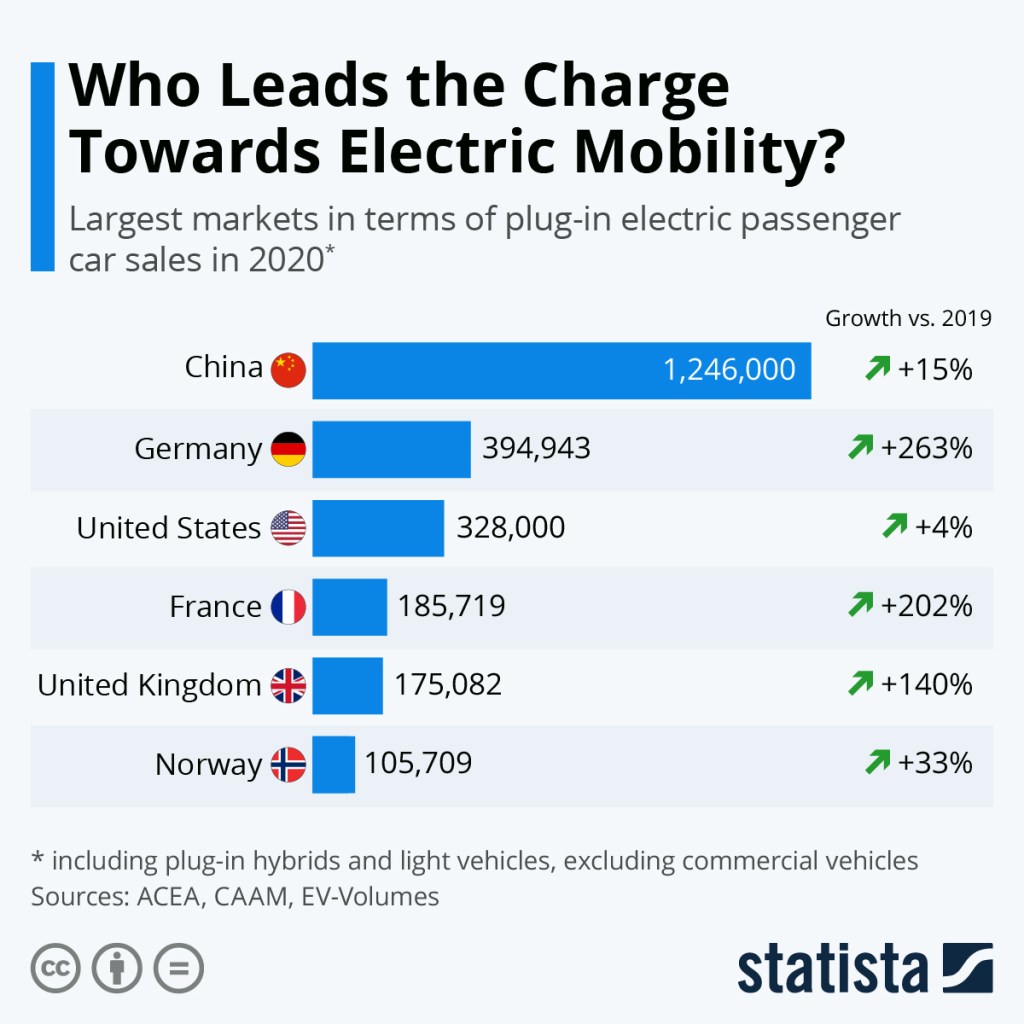
SAIC is one of the biggest car companies in China, targeting sales of 6.4 million units in 2021 with an electric vehicle target of 768,000. They already sell cars under the MG brand in overseas markets, although overseas sales account for only about 5% of their total vehicle sales of 6.2 million units in 2019. Their aggressive 2021 growth objective of 14% is likely to see a focus on international growth as well and you might soon see Roewe e950s at a charging station near you.

While SAIC started as a typical state-owned enterprise, with a license to print money by handing out JV deals to global auto brands, they have developed the Roewe brand into a strong player in China – with an increasing focus on plug-in-hybrids and electric cars. Given that China is also the world’s leading market for electric cars, players who succeed here clearly have what it takes to do well overseas. Ironically, the fact that they’re smaller in China than BYD may propel them to go global faster, since their focus is on more premium segments with models that will do well globally.

https://www.statista.com/chart/13143/electric-vehicle-sales/

Conclusion

While there’s no saying where these brands will go in the future, they’re both solid businesses with a presence beyond China, some competitive chops and global ambitions. Look out Apple, Samsung, Tesla and GM – the competition is coming.

While our focus as a consultancy is making new brands famous in China, there are many (already) famous Chinese brands that aren’t well known overseas. We will be bringing them to light in this series over time.

If you’d like your brand to be famous and successful in China reach out to us at enquiries@searchlightchina.com – we work with both local startups as well as international brands that would like to do better in this market.
Famous Chinese brands you’ve never heard of

Often, when I refer to a famous Chinese brand in conversation with someone who doesn’t live here, I get a look of bemusement. To try and create greater familiarity for those living elsewhere, we’ll periodically profile some of the prominent brands and businesses that we believe will be household names across the world soon.

We’ll start with two brands – Xiaomi (小米)and Roewe(荣威)- a car brand from SAIC Motors.

Xiaomi (小米) is a consumer electronics major that already has a presence in China and India and despite some headwinds in the stock market and in India, is well placed for long term growth

SAIC Motors – better known for their Roewe brand – is one of China’s leading car manufacturers that is also dominant in electric cars and has a presence in overseas markets through the MG brand that it bought from Rover many years ago

Xiaomi

Background and history

Xiaomi is a young company, founded only in 2010. It started as a smartphone company, expanded into building it’s own OS and then started both making and investing in a whole array of products in the IoT sector. Today the Xiaomi brand graces a multiplicity of consumer appliances – rice cookers, water filters, smart weighing scales, air-purifiers and the like – all IoT in nature and building towards the concept of a smart home where every device is connected to the internet to provide a better consumer experience.

Xiaomi’s latest TV features a unique transparent screen that allows it to blend into the background when not in use

Financials

Xiaomi generated a total of 205 billion RMB revenue in 2019 according to its latest financial statements, with a very healthy 28 billion in Gross Profit and 10 billion in Net Income.

Success Factors

Xiaomi first made waves in China as an affordable, no-compromise alternative to the iPhone. Instead of being apologetic about their affordability they focused on being an iconic brand, more youthful and approachable than iPhone – amongst other things Apple had very few stores in China back then and while an iPhone was immensely desirable, a lot of the people who could afford it still couldn’t get their hands on one.

Xiaomi evolved rapidly into an iconic brand in its own right, with its own, very unique minimalist design aesthetic. Instead of being an iPhone imitator or a cheap copycat option, it is now a brand with a loyal following and its own community of fans.

It has expanded into multiple other appliances both through direct manufacturing and through funding other technology startups. Every product that bears the Xiaomi name has the same recognizable design features. It has also consistently delivered better features at a lower price than other brands, making it both cool and value for money.

Expanding into an ecosystem of IoT products has taken the brand in a unique direction towards becoming the arbiter of a smart-home. Their success in India is a bit more traditional, driven mostly by affordable smartphones, but in the process they’ve set up a significant manufacturing base in a second country . Ranked 3rd amongst global smartphone makers in a recent report (https://www.idc.com/promo/smartphone-market-share/vendor) Xiaomi may manage to avoid some of the political headwinds that have hurt Huawei’s business interests overseas and go even higher in the global rankings.

SAIC / Roewe

Background and history

Around 2006, SAIC acquired the MG brand from MG Rover (now defunct) and was also trying to get rights to the Rover brand. When this didn’t work out they came up with a Chinese brand – Roewe (荣威)- which has now become a well-recognized marque in China. SAIC developed the electric and hybrid technology behind the Roewe models. With the 550, 750 and 950 models, they focused on the mid-price and premium car segments in a manner analogous to BMW (3/5/7 series) and Mercedes (C/E/S models) but at lower price points and with more hybrid and all-electric choices.

Financials

SAIC is a mega-corporation with dozens of subsidiaries and JVs with global car brands, so its numbers are pretty staggering. Overall, according to its 2019 annual report it had an operating income of 843 billion RMB in 2019 (down from 902 billion in 2018) with over 35 billion in net operating profit. While about 14 billion of that income (and presumably profit) was from interest, that’s still a reasonable margin for a manufacturing business. SAIC has remained in the top 100 of the Fortune 500 for several years and is the 7th largest car manufacturer in the world as per a 2020 survey.

Success Factors

SAIC is one of the biggest car companies in China, targeting sales of 6.4 million units in 2021 with an electric vehicle target of 768,000. They already sell cars under the MG brand in overseas markets, although overseas sales account for only about 5% of their total vehicle sales of 6.2 million units in 2019. Their aggressive 2021 growth objective of 14% is likely to see a focus on international growth as well and you might soon see Roewe e950s at a charging station near you.

While SAIC started as a typical state-owned enterprise, with a license to print money by handing out JV deals to global auto brands, they have developed the Roewe brand into a strong player in China – with an increasing focus on plug-in-hybrids and electric cars. Given that China is also the world’s leading market for electric cars, players who succeed here clearly have what it takes to do well overseas. Ironically, the fact that they’re smaller in China than BYD may propel them to go global faster, since their focus is on more premium segments with models that will do well globally.

https://www.statista.com/chart/13143/electric-vehicle-sales/

Conclusion

While there’s no saying where these brands will go in the future, they’re both solid businesses with a presence beyond China, some competitive chops and global ambitions. Look out Apple, Samsung, Tesla and GM – the competition is coming.

While our focus as a consultancy is making new brands famous in China, there are many (already) famous Chinese brands that aren’t well known overseas. We will be bringing them to light in this series over time.

If you’d like your brand to be famous and successful in China reach out to us at enquiries@searchlightchina.com – we work with both local startups as well as international brands that would like to do better in this market.

Marketing in a Pandemic – the need for business model reinvention

COVID-19 has been with us for about a year now. In that year, companies like Zoom have gone stratospheric. E-commerce and food delivery have prospered. Online trainers, home gym equipment and virtual learning have all been much in demand. Netflix has done very well indeed.

At the same time, some businesses have suffered. Anything related to travel, obviously – hotels, airlines, cruises and so forth. Restaurants and hospitality are down too and physical retail as well.

I was looking at a chart recently on how sales of automobiles have dropped in the last year and it got me thinking about whether, in some of these categories, the dip in business was really due to a failure in marketing imagination.

https://www.statista.com/chart/24059/new-passenger-car-registrations-by-country/
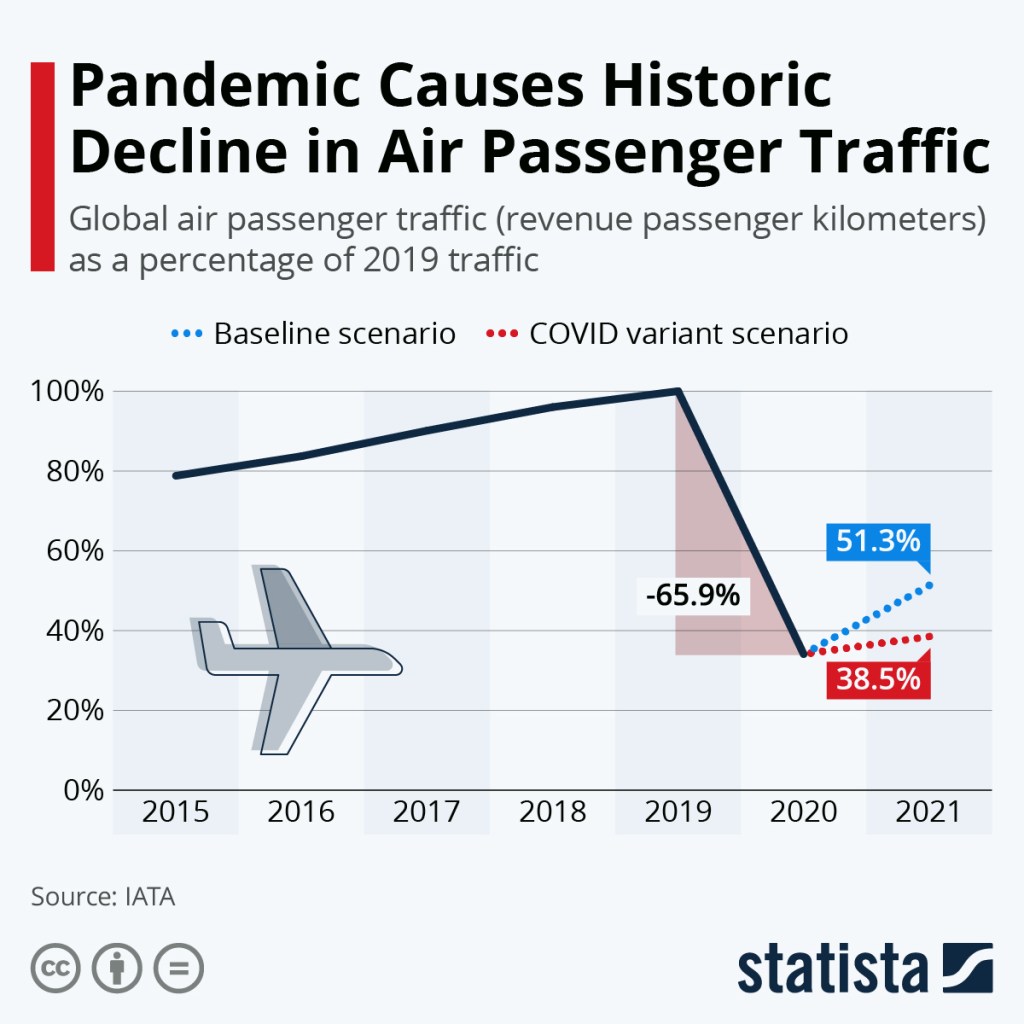
https://www.statista.com/chart/24107/global-air-passenger-traffic/

I’m surprised that none of the car manufacturers has taken the opportunity to win users off public transport, for instance – in places where people still get to go out. Bear in mind that most countries had only partial lockdowns for short periods of time so for the most part, people did go out to do essential shopping, pick up food and so forth. Plus, even when the pandemic is “over” there will still be a lot of concern about going out in crowds, so this is more than a short term opportunity. Particularly in big metropolises where a large number of younger consumers choose not to own cars and call Uber or ride buses or the subway, there is an opportunity to position a car as your safe-haven when going out. It doesn’t have to be about selling cars – there are other business models, like short term leases – which could have helped with the business during this time.

Similarly, airlines and cruise companies trying to do “trips to nowhere” is another failure of imagination. To my mind, taking an airplane up in the air or a ship out on the water incurs all of the costs for very limited revenue. Looking at a cruise ship differently – like an amusement park or as a variety of dining and shopping experiences – could lead to people going on a day trip (on a stationary ship) just to enjoy the static facilities. Similarly, airlines could set up experience trips – showing people around the cockpit, engines, control tower and also experience a luxury meal in business / first class seats on a stationary airplane. Trying to get revenue without turning on the engines would be far better than a flight which just circles back and lands at its originating airport.

Those are not going to work for the industries as a whole, obviously, since there is a macroeconomic trend affecting them, but for a few players in each industry who think differently (and potentially have a product / service to quickly redeploy in a new way) there is an opportunity to limit the damage from COVID and perhaps build out a new line of revenue that survives the end of the pandemic.

In some ways, if you look at the business successes of COVID-19, they suffer from the same lack of forward thinking.

Zoom did well because it was the only good option at the time the pandemic started – however, it’s started losing ground to Teams and other video calling options because it didn’t really prepare for the level of usage that happened. Additionally, none of these apps is taking the next step towards creating a virtual work environment rather than just a video calling environment – something that will very likely be needed now that WFH has become more of a way of life than ever before. Even at a less esoteric level, if one of these apps were to start offering simple features that allow someone to apply virtual make-up or virtual formal clothes, it would become a winning difference. We’ve seen cat filters and virtual backgrounds, sure, but the times call for more small features that are actually valuable to frequent conference-call participants.

It all comes back to one thing – understanding changing consumer needs and coming up with solutions to them – that is the core of marketing and indeed, the core of any successful business. If you happened to be lucky and your product or service suddenly became indispensable, great – but you still have to think about whether it’s enough as time goes on and consumer needs become more entrenched. If you happened to be unlucky and your product or service doesn’t work in a changed environment, think about how it might be adapted or reimagined in order to do so.

We have a global medical supplies client who was dependent on the hospital distribution system for their business. Sales in China suffered when hospitals started discouraging patients from coming back for anything that wasn’t a serious medical condition. Over the past year they’ve built a direct-to-consumer channel in China on e-commerce and are expanding into more such channels as a long term strategy. In a category in which B2C was unthinkable in the past and does not exist as a model anywhere else in the world, we’ve helped build a B2C model in China that can become a very viable route for the future.

Change is an opportunity for most businesses – those that make the most of it will find new successes and those who don’t do enough will fall by the wayside even if at this moment, success seems to have found them entirely by serendipity.

At Searchlight Consulting, we help clients think about effective solutions in marketing and business. Each of our Managing Partners has over 20 years of business experience and the writer of this piece, D.Sriram, has had a 30+ year career in China and Asia in business leadership roles at agencies, Ad-tech and consulting companies.

Get in touch at enquiries@searchlightchina.com if you’d like us to conduct an ideation workshop to help you identify new ways of doing business.

3 Top Tips on picking a new agency in the new year

It’s January and many clients’ thoughts will soon turn to the year ahead. Often, this is when a decision is made to call a pitch, evaluate different agencies and choose one to work with for the next couple of years (at least!)

Based on my experience running pitches for clients over the last 3 years, here are my top 3 tips on making the process a productive one that results in a positive partnership rather than a war of attrition.

  1. Be clear what kind of agency you need

I’m amazed at how many clients appoint a generalist agency when most of their money is behind spent behind specialist skills. There is a huge reluctance at most clients to split their assignment across agencies and in their search for a single point of contact, clients end up giving a generalist agency control of the entire budget. The money you save on dealing directly with specialists will more than justify the cost of hiring an internal person to manage them. If most of your money is going into performance marketing or e-commerce or a single medium, work with a specialist.

2. Be clear what kind of relationship you want with your agency

Are they a low-cost supplier, key execution expert or a true strategy partner? This is what will drive their KPIs, the team you ask for and the skillsets you need. If their key role is driving business success for you, don’t tie them down with detailed spreadsheets of cost commitments – build a framework where your interests are aligned and you can get the best out of your agency.

3. Be clear how you’re going to evaluate agencies during and after the pitch

A lot of times, clients don’t do a good job of setting up evaluation criteria and getting people with the right levels of knowledge to then score the agency on them. I’ve seen situations where the finance / procurement team has the same number of votes on media strategy as the marketing and media team – which, with all due respect to the finance function, makes zero sense. Set up a proper scheme of what criteria you’re using, what weights are attached to them and which individuals / functions score on each criterion.

You’ll notice all those points start with the words “be clear”. That’s not a coincidence. Lack of clarity is a malaise affecting many areas of business and the gentle art of partner selection is definitely one of them.

With over 30 years experience managing agencies, ad-tech startups and consulting Sriram has a deep understanding of how media and ad-tech services work, especially in China. Most recently, he’s had experience managing pitches for over 20 clients in the last 3 years. Reach out to him for input and advice on how to define and select your marketing services partners in China

The empirical approach to defining a target audience – Spray, Learn, Focus

For the first 20 years of my working life, I was in an advertising or media agency. In our interactions with clients, very early on, there would be a defined target audience that we set out to create communication for or buy media in order to reach. Usually, the definition of that audience was based on an extensive U&A (usage and attitude) study or other forms of market research.

At one point a few years ago, I was working in a mobile ad-tech company that was a DSP, Ad Network and performance agency rolled into one – not to mention being in the business of developing and licensing a DSP platform. One of our biggest clients was Uber, focusing on acquiring users in China. We also had other clients who were focused on user acquisition in different markets – Taiwan, Japan, South East Asia and so on.

When the data science team first sat down with me to explain how they started a campaign I was fascinated to find that they didn’t begin with any defined target audience at all. Instead, they’d attempt to deliver impressions evenly across every single audience segment they could define – and in an ADN environment where we were installing our own SDKs onto mobile apps and therefore reading a lot of data from consumer phones we could define segments using a very large number of variables including phone hardware and software specs, apps on the phone, frequency of usage of those apps and so forth. Typically we had several thousand segments in any initial campaign.

The approach was that we’d deliver enough impressions in each segment to start getting a read of consumer response – click through rates, app download, app install, user registration and first usage of the app. Then, based on where the segment size and response rates were most promising, our system would start optimizing bidding for and buying impressions in those segments so that we could deliver the client KPI at the lowest cost. Once we’d exhausted a segment and the response rates in it came down, the system would automatically move to the next best on the list and so on.

Across clients, while I could often “predict” the target audience, I often found to my surprise that the user profile which emerged from doing this kind of exercise led to a counter-intuitive audience definition, but one that was delivering results.

Of course, we had more than our fair share of clients who just wanted to deliver impressions against a pre-defined audience and we didn’t get to do this kind of experimentation with them but I’d often wonder if they’d missed something in defining their audience.

For one thing, brands often define their target audience using fairly theoretical criteria, or with research that’s done under very unreal conditions. I’ve seen lots of audiences defined in terms of psychographic or other variables that don’t show up as filters when you’re buying media, so they’re essentially useless. Digital media buying, especially once we get to a post-cookie world, will be entirely predicated on observing and reacting to a consumer behavior without knowing much more about them, so this obsession with defining a segment with lots of variables that can’t be used as filters will become even more useless over time.

We used to talk about “spray and pray” media strategies where clients bought broad reach media and then hoped that sufficient spending and share of voice would deliver results. We now have the option of “spray and learn where to focus” media where you can observe which consumer behaviors lead to the responses we want, identify a buyable audience on that basis and focus subsequent buys on that definition.

That process works only if you have a hard KPI, of course. You need a KPI that is a specific consumer action specific to a brand or to the ad that they’ve just been seen. Unfortunately many marketers have not evolved their KPI definition as digital media has evolved its capability of delivering them.

So, what would I recommend?

Start with a campaign that has a specific purpose – not just reach / frequency / awareness, but an action relative to a brand.

Work with a set of DSPs/ADNs/ performance marketing agencies and invest some initial money on delivering impressions across a broad audience, segmented by behavioral and other data in as much detail as possible, reading the results in terms of whatever hard KPIs you’ve set.

Analyze the results and identify the (behavioral) segments that give you the best results.

Focus on those going forward until the results start to dry up – then move to the next best tier of segments.

Two advantages of that:

  1. If you’ve defined a suboptimal audience, you’ll learn very quickly who your audience really is
  2. You’ll be defining a target audience in terms that actually make sense when buying media, instead of using theoretical filters that are hard / impossible to apply to real life media

If you’re launching a brand that’s never existed before and has no history or taking a brand to a new market with different consumers and culture, this approach makes even more sense.

Don’t spray and pray – spray, learn and focus.

3 problems with the procurement approach to media buying – and why the partnership approach is better

Long ago (when dinosaurs roamed the Earth and I was a young lad skipping carefree through the meadows, placing a media buy here and there as I went) media agencies were treated as partners by their clients. We were co-owners of their successes and failures and while we never forgot that we were running our own business, we did focus a great deal on our clients’ businesses. We took client media managers to key media negotiation meetings, involved them in our calculations, projections and negotiation strategies and gave back every penny that didn’t belong to us.

Now? Media Agencies get hired and fired every couple of years. We read non-stop about non-transparent transactions (not just in media buying) and various other scandals of a financial nature. Agencies rarely have a CMO relationship any more.

What changed? In a word, media buying (and a lot of other services that get delivered through agencies) became the responsibility of procurement departments.

Now, I’m not saying there’s anything wrong with procurement departments. A long time ago when P&G first got procurement people involved as advisors to the media buying process I was blown away by the insights and skills they brought to the process. Their strategies and approaches improved our results tremendously.

What I’m not a fan of is some of the specific frameworks and approaches that get applied to media buying and other advertising services without thinking about whether they make sense (even when most indirect / marketing procurement people come from an agency or marketing services background)

Problems with the Procurement Approach

  1. Advertising services and media buys are critical to demand generation – not to product supply – therefore media buys are fungible in a way that product components cannot be. You can’t substitute a gear wheel for a pulley wheel but you can substitute one media buy for another if it delivers better results with consumers.
  2. Your media buys for the near future can be entirely different from last year or last month’s: making it hard to get commitments for what you don’t know you’re going to buy.
  3. Unlike physical components or raw material, consumer attention is highly time-sensitive Whether it’s impressions or clicks or anything else, if a media owner doesn’t manage to monetize it fast, it’s gone. This is especially true in real-time bidding environments where the variability of pricing is particularly apparent. Pre-commitments, faster decision-making frameworks and a focus on the real KPI to deliver all make a difference to the price which is not really possible to predict a year in advance.

Given all this, procurement’s insistence on pricing commitments for specific media buys and treating these as guarantees is completely wrong.

All of this is even more true in China – where a typical set of media buying commitments is a humungous data set with literally tens of thousands of lines. Imagine the 3 problems I’ve just outlined in the context of that large a volume of media buys. You will never achieve a result where an agency meets every single one of that many price commitments, so why do this in the first place? If the intent is to achieve an overall result, then do the analysis and commitment at that level.

Our solution – The Partnership Approach

Working with the agency to deliver common targets instead of making it the singular responsibility to deliver cast-iron commitments

The fundamental thing that needs to change is getting media agencies to put down pricing for very detailed media buys and then treat these as guarantees that the agency has to meet out of its own pocket if necessary. We never did this in my agency days – but we also did a great job then of delivering competitive pricing and not making money in other ways.

“But agencies will be uncontrollable without price guarantees” I can hear my friends in procurement (yes, I still have some) say.

Not true at all. You can still have pricing targets, set up a proper incentive and penalty plan for deliver and then work with the agency closely to achieve genuine client-specific deals. You can insist on and get real transparency and a return of all rebates and discounts that fairly accrue to you. If new media crop up you can have a framework for determining a target price before going into negotiations that you have complete visibility of.

Doing all this means discarding the convenience of cast-iron guarantees in excruciating detail on an extremely large spreadsheet (think 100 times larger for China!). It means paying (and incentivizing) the agency fairly, getting involved in key deals, putting in and monitoring a contract that mandates transparent transactions, collaborating on negotiation strategies and target pricing… It’s a lot of work. However, if you’re interested in using media as a means to build demand, it’s a far more productive approach than the one that most clients use now. It’s also an opportunity to involve the agency in outputs and strategy rather than just input pricing, creating a greater alignment of motivations and interests and a real sense of partnership.

With over 30 years experience managing agencies, ad-tech startups and consulting Sriram has a deep understanding of how media and ad-tech services work, especially in China. Reach out to him for more information on how to frame and apply our Partnership Approach to your marketing services partners in China.

Alibaba’s 11.11 (world’s biggest online shopping festival) – hype or honest opportunity?

Double Eleven (11.11, or 11 Nov), a.k.a. Singles’ Day Festival is a global shopping event initiated by Alibaba and adopted by other e-commerce platforms and retailers. For those who are not familiar with it, Alibaba’s online shopping event on November 11 every year is the biggest in the world. You could say Black Friday is Amazon’s weaker, smaller version of the behemoth that is 11.11.

Alibaba dominates over 60% of online sales in China and online sales are over a quarter of retail – a very powerful position  often seen as a platform for launching brands to dizzying heights of success.

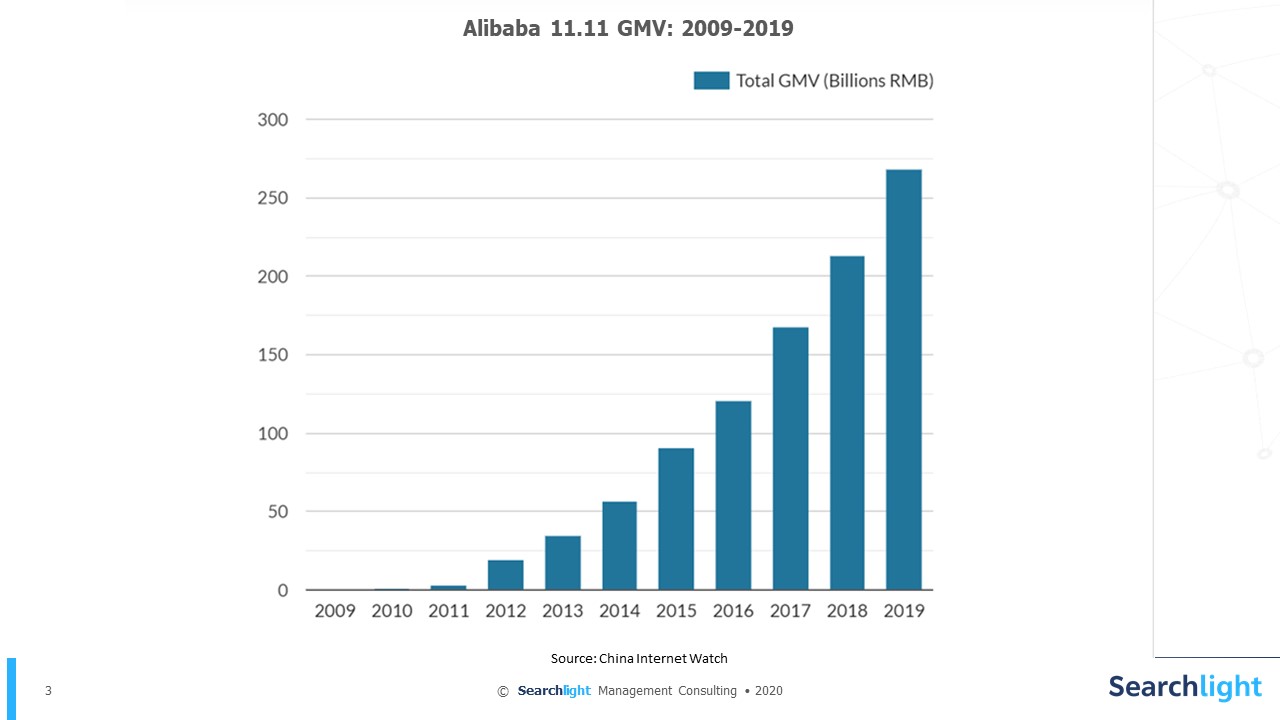
Double 11 GMV historyIt’s interesting to look back at 2009 when this took place for the first time and note that only 27 brands took part in a one-day sale that netted about 50 million RMB in GMV. That number has grown exponentially to 268 billion RMB in 2019. More than 100 brands rang up sales of over 15 million USD (about 100 million RMB) in the first two hours of that day – each more than double the value of that first 11.11 more than a decade ago.
Quite apart from the overall volume and business opportunity, 11.11 is often the stage on which new brands become stars. 11 of the brands that shot to category leadership positions (within Tmall) in 2019 were completely new brands. In 2020, even before the 11th of November, 359 new brands occupied category leadership positions in the 1st phase on November 1 – ( what used to be a single day festival has already extended to a much longer period, but that’s another story) – before the festival reaches its peak spending day on the 11th.

However, it’s not all champagne and roses for brands on China’s most powerful ecommerce platform. For one thing, the rules change a little bit every year. In 2018, for instance, the shopping festival really started as early as October 20 with a presale requiring a 10% deposit, a promotion period with up to 50% value vouchers from the brand from Nov 1 to 10 and then, finally, the 24 hour period when consumers could close their orders and complete the transactions in their shopping carts on 11.11.

Brands face tremendous pressure from the channel on various fronts if they are to participate in and benefit from the tremendous momentum of this day. First, they have to meet volume, store ranking and service level criteria to participate in the festival. Then, other than platform commission, they need to support Tmall in their advertising to get access to the promotional resources from the channel. Finally, they need to guarantee that the lowest prices will be on Tmall and in addition to this, often need to provide further vouchers and discounts to drive volume. Brands also need to pay an insurance fee to cover the cost of refunds/returns after the festival.

Despite doing all this, brands don’t get to decide how their campaign gets targeted and optimized. The channel will make those decisions and the brand just gets to pay its entrance fee and see what it gets back.

Some brands can no longer afford this and are unable to pay the price to participate in the real 11.11 sale leading to some very clever tactics to try and leverage the occasion without playing Alibaba’s game.

In 2017, UNIQLO achieved RMB 100 million within the first minute on 11.11 becoming the leader of the apparel category and the 1st brand to achieve 100 million in the entire 11.11. Most interestingly they had a strategy to drive Alibaba traffic to Uniqlo’s offline retail store.

Most of the SKUs in UNIQLO shop were sold out in the first hours (probably quite deliberately) and the brand issued an apology for being out of stock online and encouraged visits to the offline retail stores offering exactly the same price as advertised on 11.11.

In subsequent years UNIQLO has tried variants on this – letting people shop online but pickup at the store as well as promoting the sale on 11.11 in-store – all of which have worked well to let it leverage the shopping frenzy of the day while avoiding a lot of the costs and loss of control on Tmall.

For a lot of smaller brands that cannot afford to spend against bigger competitors on premium in-site inventory during 11.11, they need to be clear why they’re participating and what their primary objective is in being on the platform on that day. Is it a brand building opportunity given the size of the audience? Is it a chance to reach new customers, increase trials or as a sales volume driver?

While 11.11 still remains an exciting opportunity, especially for VC funded startup brands with deep pockets, no history and nothing to lose, most mature brands are now more choiceful about how they use it. A business that is built entirely on the back of sales from this one event is harder to sustain. As part of a marketing mix that encompasses traditional brand building, social media outreach, paid & organic influencers and other elements there is often a more viable way to use Tmall and 11.11 as a means to an end, without becoming unduly dependent on a diet of promotional pricing and deep discounts to win consumers.

Jacquelyn has over 20 years experience in branding and marketing, with specific expertise in the China e-commerce ecosystem for both multinational and startup brands. She has helped several brands navigate a change from B2B to B2C business models. Reach out to her for more information and insights on branding and commerce in China.

Opportunities and hurdles in China’s vast e-commerce market

At first sight, the China e-commerce market looks like a marvelous gateway to the land of 1.3 billion consumers. However, there are some key differences between the e-commerce world here and elsewhere.

Brands are not in control of their online commerce in China the way they can be elsewhere.

There is room in most markets for brands to run their own online sales sites, giving them greater control over the brand and their data. Amazon does not dominate e-commerce and e-commerce does not dominate retail as much as Alibaba dominates retail in China.

China E-C players are also dominant in the digital advertising / media/ lifestyle ecosystem

Amazon is a pure e-commerce player who does not own an advertising inventory or digital ecosystem outside their own assets. Alibaba on its own and JingDong through its strategic partnership with Tencent are also the largest owners of inventory, apps and consumer interactions at various points, allowing them to put up walled gardens around groups of media, apps and ecommerce. This makes performance marketing, attribution and optimization practically impossible within the China e-commerce platforms.

China E-C players (especially Alibaba) are in a position to dictate to brands and exploit this strength very aggressively

Given the dominance of the platforms, advertising, pricing and promotion strategies are often modified in order to play ball with the big platforms in the hope that Ali will allocate them marketing resources and access to consumers.

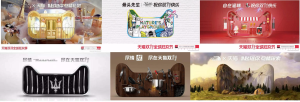
Every year, during Alibaba’s Tmall Double 11 shopping festival (the biggest online shopping event in the world) brands are “encouraged” to spend money doing special ads on mainstream, media within the same visual symbol of the Tmall Cat – this earns them credits and access to tremendous promotional resource and traffic during Double 11. Proud icons like Maserati, North Face and so on all have ads in this format

Despite these hurdles, there are regular success stories of brands that came from nowhere and hit 100 million RMB in their first year. Clearly, there are ways to navigate the challenges of e-commerce in China so as to win.

Jacquelyn has over 20 years experience in branding and marketing, with specific expertise in the China e-commerce ecosystem for both multinational and startup brands. She has helped several brands navigate a change from B2B to B2C business models. Reach out to her for more information and insights on branding and commerce in China.